Pay in installments of $5.39 with
 ,
,
 and
and

Shipping Estimate
USA
- USA
- CAN
- USA
- CAN
Ships within 48 hours · Estimated delivery Jun 30 - Jul 5
 Promo Codes Available:
For Your Every Summer RSVP, with Code: SUMMER15
Description
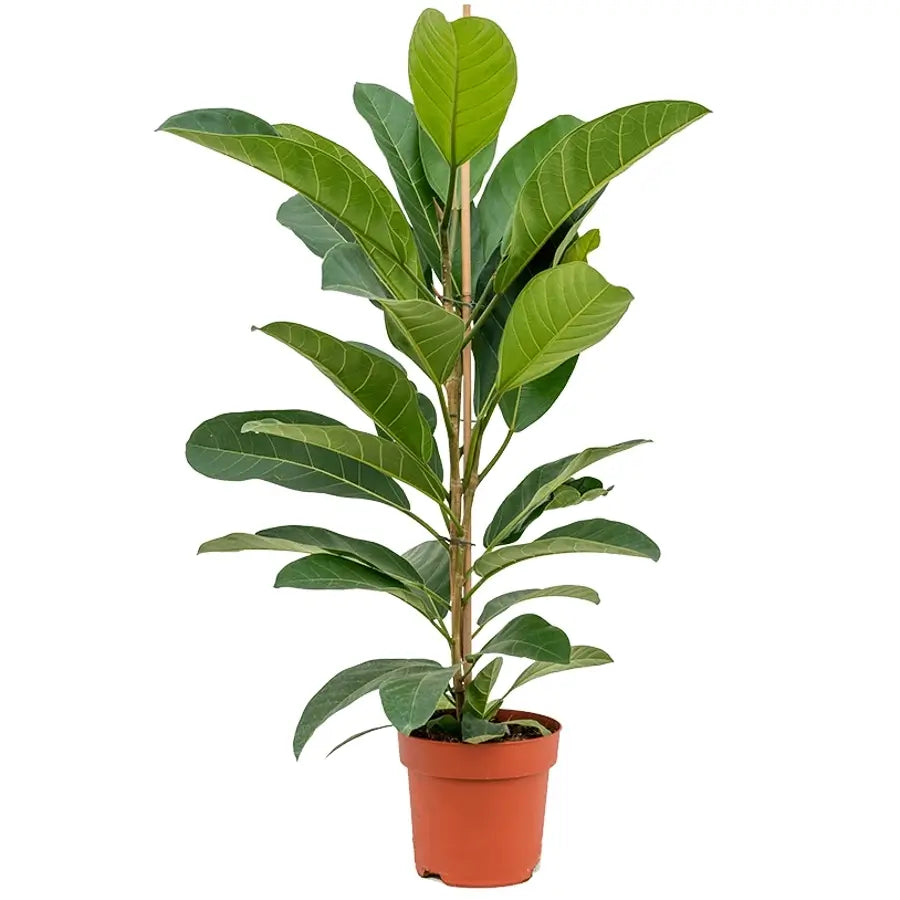
indian banyan indoor plant Ficus benghalensis 'Roy'Ficus benghalensis 'Roy' Ficus benghalensis 'Roy' is a Bengal fig grown as a sturdy indoor tree with broad, firm leaves and a woody stem structure. Even as a pot plant, it keeps the leathery leaf texture, latex bearing stems and gradual branching habit of a tree forming Ficus. In a container, Ficus benghalensis 'Roy' develops through woody shoot extension and side branching. Bright filtered light encourages shorter spacing between leaves, stable
Ficus benghalensis 'Roy'
Ficus benghalensis 'Roy' is a Bengal fig grown as a sturdy indoor tree with broad, firm leaves and a woody stem structure. Even as a pot plant, it keeps the leathery leaf texture, latex-bearing stems and gradual branching habit of a tree-forming Ficus.
In a container, Ficus benghalensis 'Roy' develops through woody shoot extension and side branching. Bright filtered light encourages shorter spacing between leaves, stable warmth protects root uptake, and an open substrate lets the root ball dry evenly after watering.
Growth markers of Ficus benghalensis 'Roy'
- Plant shape: Develops as a woody indoor tree with firm stems and a branching framework.
- Leaf texture: Broad leaves have the thick, leathery feel typical of Bengal fig houseplants.
- Species identity: Belongs to Ficus benghalensis, a banyan fig species native to the Indian Subcontinent.
- Long-term growth: Can be pruned to manage height and encourage a fuller canopy as stems mature.
Bengal fig framework indoors
Ficus benghalensis is a tree species from seasonally dry tropical parts of the Indian Subcontinent. Outdoors in suitable climates, banyan figs are capable of large-scale trunk and aerial-root development. Indoors, Ficus benghalensis 'Roy' remains a container-grown woody plant shaped by light, pot size, and pruning.
The broad leaves depend on a root ball that rehydrates fully and then drains cleanly. Dense or saturated substrate can show as yellowing, leaf drop or weak new shoots, especially in cooler rooms.
Ficus benghalensis 'Roy' care details
- Light: Give bright filtered light near a window. Better light supports stronger internodes and helps the plant hold a more balanced branch structure.
- Watering: Water when the upper substrate has dried and the pot feels lighter. Rehydrate the full root ball, then empty any standing water from the cover pot or saucer.
- Substrate: Use a mix with bark, coco chips, pumice, perlite, or mineral grit to keep air moving through the root zone. Fine, compacted substrate raises the risk of yellowing leaves.
- Temperature: Keep warm, ideally above 18 °C. Stable warmth helps the roots continue taking up water after each watering.
- Humidity: Average indoor humidity is usually acceptable with steady watering, though very dry heating air can roughen leaf edges during new growth.
- Feeding: Feed moderately during active growth. Reduce fertiliser when the plant is resting or when light levels are low.
- Pruning: Trim above a node to manage height and guide branching. Use gloves because cut stems release latex.
- Repotting: Repot once the roots are dense enough to dry the pot quickly or push against the container. Refreshing the mix often improves watering control.
Ficus benghalensis 'Roy' problem signals
- Leaf drop after moving: Ficus often reacts to changes in light, temperature, or watering rhythm. Keep conditions steady and check root moisture before moving it again.
- Yellowing leaves: Check whether water is lingering in the lower pot. Improve drainage and let the root ball breathe between waterings.
- Brown patches: Look for direct sun scorch, dry root-ball edges, or cold contact with glass. Adjust the position and trim only fully damaged tissue.
- Weak, stretched shoots: Move the plant closer to bright filtered light. Longer gaps between leaves usually mean the plant is trying to reach stronger light.
- Scale insects: Inspect woody stems and leaf undersides for small fixed bumps or sticky residue. Early cleaning and repeated checks are important on mature stems.
Handling Ficus benghalensis 'Roy' safely
Ficus benghalensis 'Roy' is not pet-safe. Its milky latex can irritate the mouth and digestive tract if leaves or stems are chewed, and fresh sap can irritate skin during pruning. Keep it out of reach of pets and children, and wash hands after cutting or handling damaged stems.
Botanical roots of the name
Ficus is the classical Latin name for the fig. The species name benghalensis refers to Bengal. The cultivar name 'Roy' identifies this Bengal fig in cultivation.
Broad leathery leaves and firm woody stems give Ficus benghalensis 'Roy' a sturdy small-tree shape indoors.
Shipping Notes
- Free Standard Shipping on $100+ Orders to the USA.
- Except Preorder products are shipped in 48 hours.
- Delivery to the USA:
- Standard Shipping : 3-10 business days
- If time is of the essence, please consider selecting expedited delivery for faster service.
Exchange/Return Notes
- We offer a 30-day return/exchange service after receiving.
- Final sale items are not eligible for returns or exchanges.
- To process your return/exchange, please contact us at [email protected]
- Please click here for more details>>> Return & Exchange Policy